New updates available now! Learn more.
An AI-powered platform backed by deep science
Cleerly is a revolutionary cardiac care platform that leverages AI technology to analyze and characterize plaque, calculate stenosis and detect likely ischemia in specific vessels.
Request a Demo
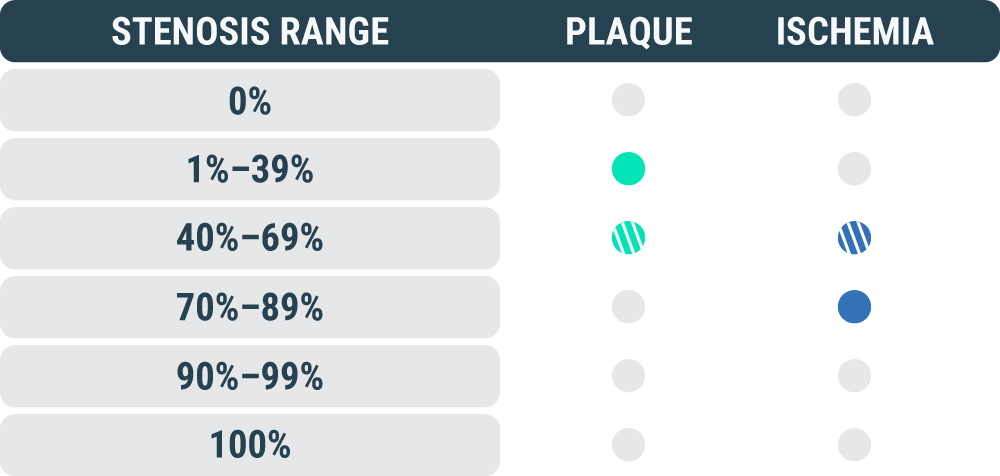
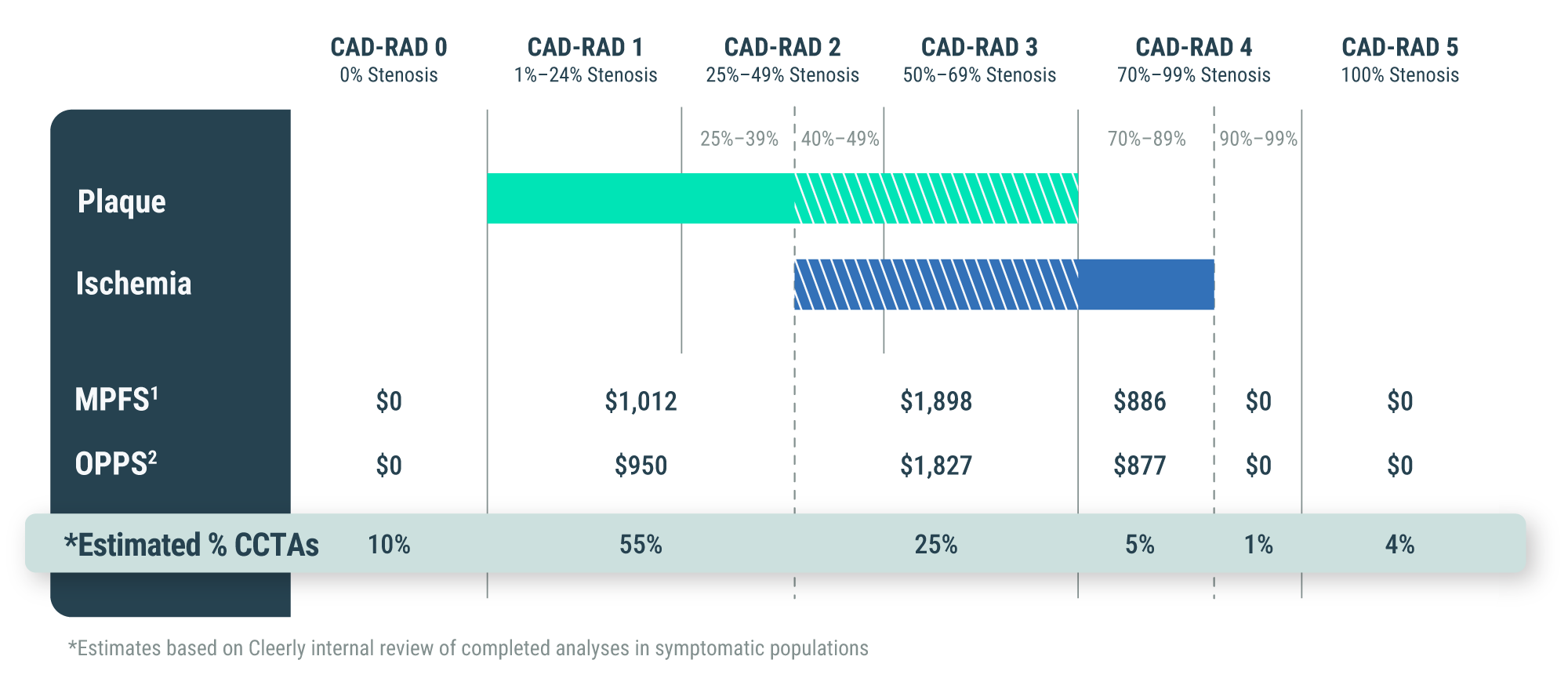
Cleerly uses proprietary and FDA-cleared machine learning algorithms to non-invasively measure atherosclerosis (plaque), stenosis, and likelihood of ischemia using coronary computed tomography angiography (CCTA) studies.
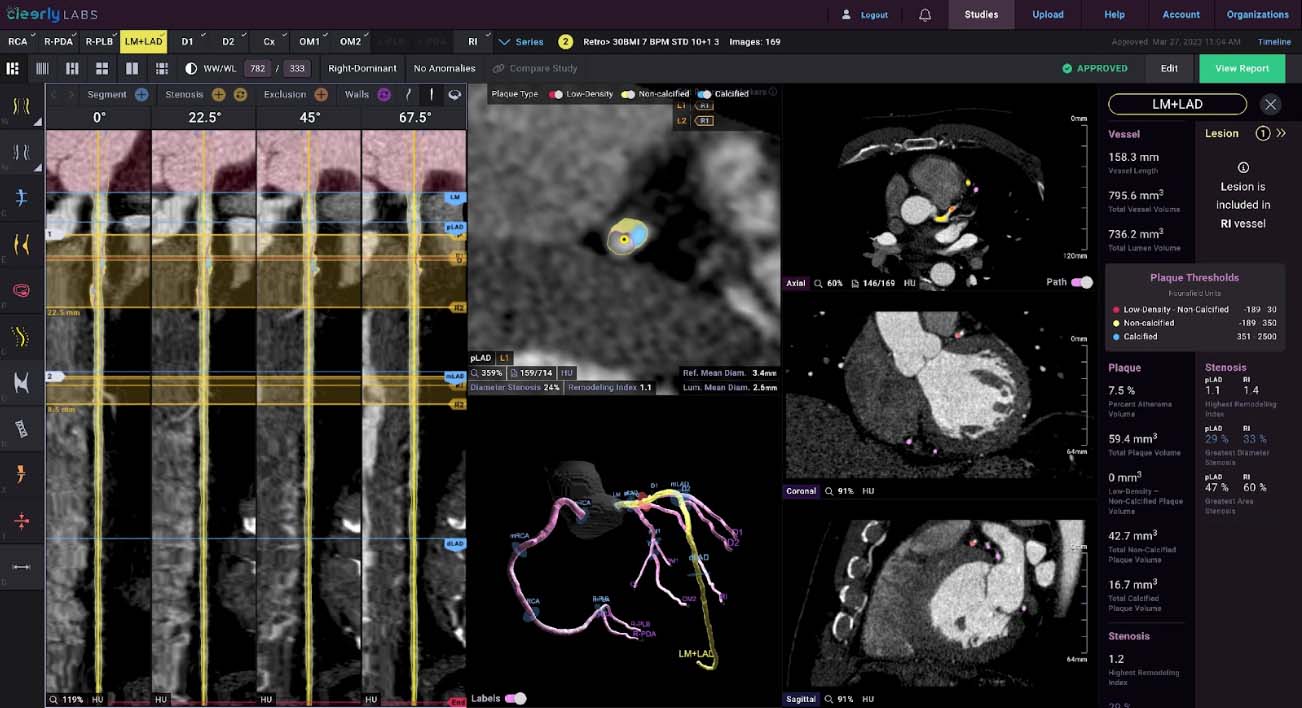
Our machine-learning AI generates a 3D model of the patient’s coronary arteries, identifies their lumen and vessel walls, locates and measures stenoses, while quantifying and categorizing plaque.1 Cleerly ISCHEMIA’s algorithm uses measurements based on invasive FFR data to determine the likelihood of vessel-level ischemia.2
These sets of quantitative measurements are presented in a comprehensive report to support providers in efficient diagnosis and personalized patient treatment. Physicians can also review results in depth via our interactive web platform.
Cleerly’s analyses are grounded in science, based on over 10 million images from over 40,000 patients gathered over a 15-year-period in landmark, multi-center clinical trials.3 In a number of clinical studies, Cleerly has shown to be comparable to invasive gold standards, including IVUS4, NIRS5, FFR6, OCT7 and QCA.8
NEW updates available now!
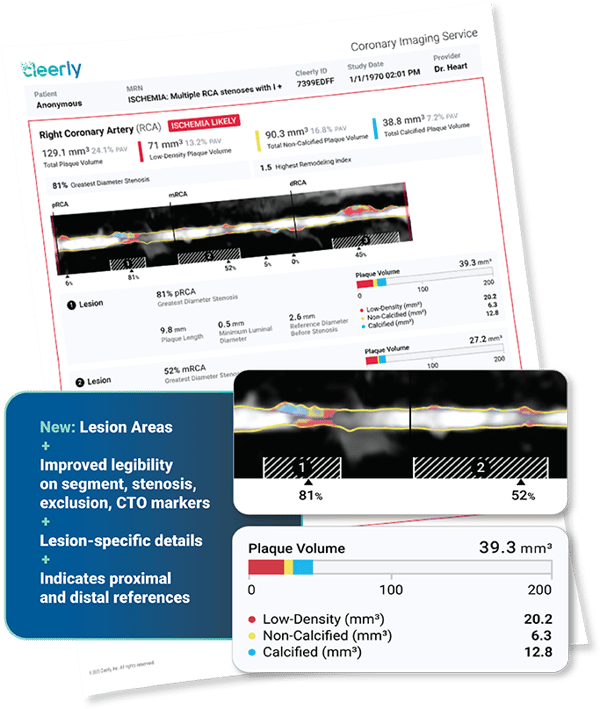
Updated provider reports now include lesion-specific data
- Detailed information about each lesion in the provider report
- Reduces the need for follow-ups with consulting physicians
- Provides visual reference to help understand treatment options and behavior change
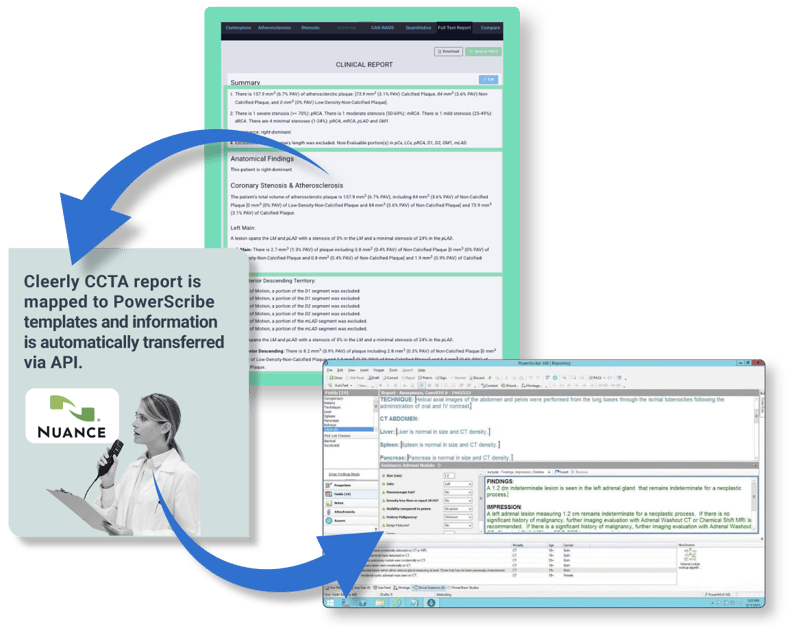
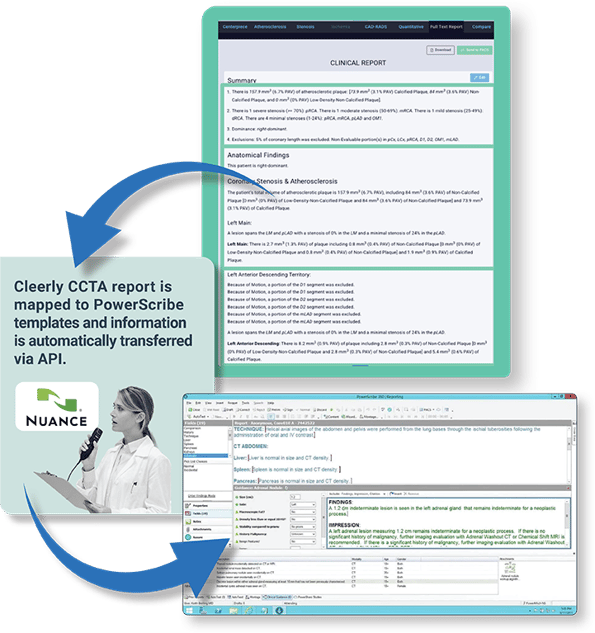
Full text reports integrated into PowerScribe
- CCTA reports transcribed and mapped to PowerScribe template
- Streamlined workflows
- Reduces manual data entry and errors
Cleerly + PowerScribe Integration FAQ
-
What is PowerScribe?
Microsoft/Nuance PowerScribe® is a radiology reporting solution that combines speech recognition and workflow management. It enables radiologists to dictate, edit, and distribute reports efficiently. PowerScribe integrates with hospital systems like PACS and RIS to streamline reporting and improve accuracy.
- The Cleerly PowerScribe API supports PowerScribe 360 and PowerScribe One.
- The API runs on Cleerly Proxy VPN and Cleerly Proxy VM.
-
What value does PowerScribe provide for its users?
PowerScribe helps radiologists and reading cardiologists generate structured CCTA findings directly within their reporting environment. Benefits include:
- Reduced manual transcription time and clicks
- Minimized data entry errors
- Improved clinical workflows
- Standardized data reporting
-
How does Cleerly integrate with PowerScribe?
Cleerly sends analysis results to PowerScribe so they appear in the CCTA report. Integration works via:
- PowerScribe API
- Cleerly Proxy
- Matching accession numbers to open reports
-
What results are available through Cleerly?
Cleerly can share:
- Study details: patient info, accession number, date, Cleerly ID, Cleerly LABS UDI
- Study-level results
- Overview: dominance, anomalies, exclusions, length, volume, CAD-RADS score
- Stenosis Summary: counts by severity (severe/moderate/minimal/mild)
- Ischemia Results: likely/not likely, vessel, reason
- Plaque Summary: PAV, plaque volume by type, number of segments
- Clinical report (FTR)
-
What’s the integration process?
Each account requires IT integration support with the Cleerly Solution Architect team. The Cleerly CCTA report is mapped to PowerScribe templates, and data is automatically transferred via API.
-
Are there any fees?
There is no charge for PowerScribe integration.
Measurable & actionable insights
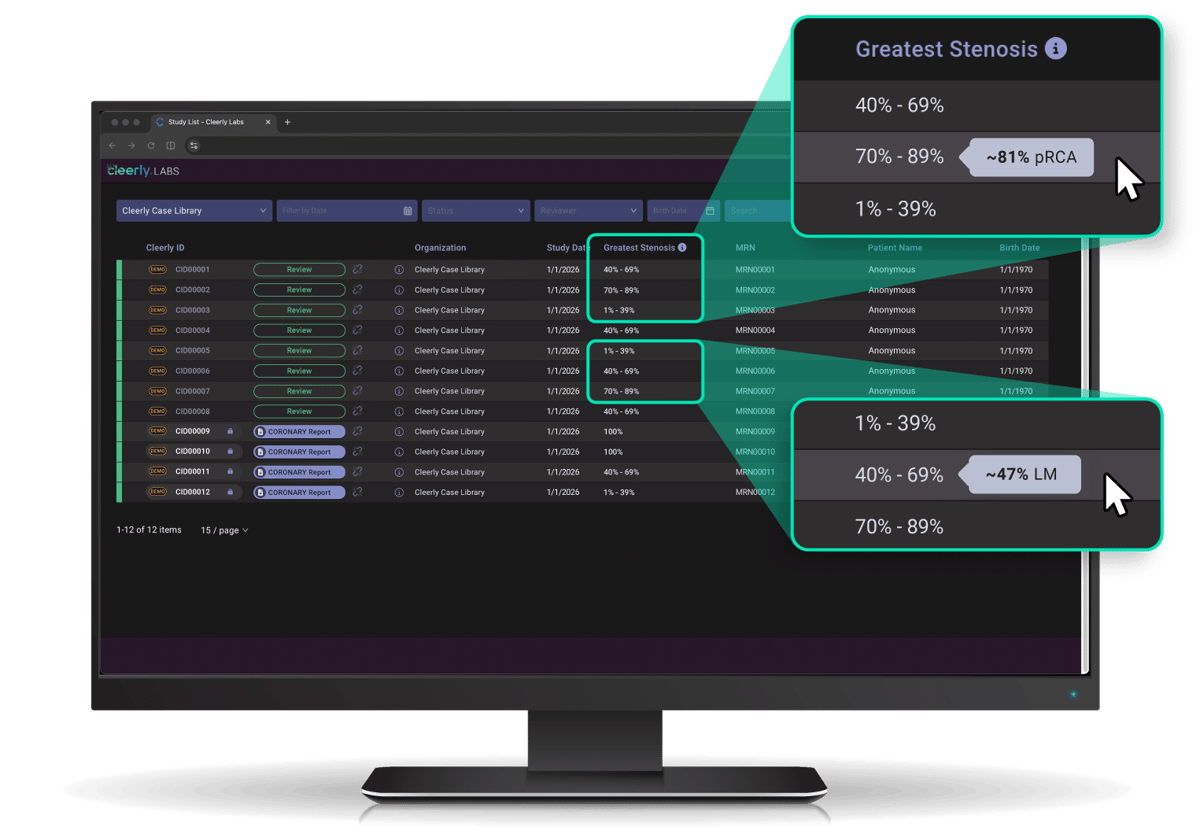
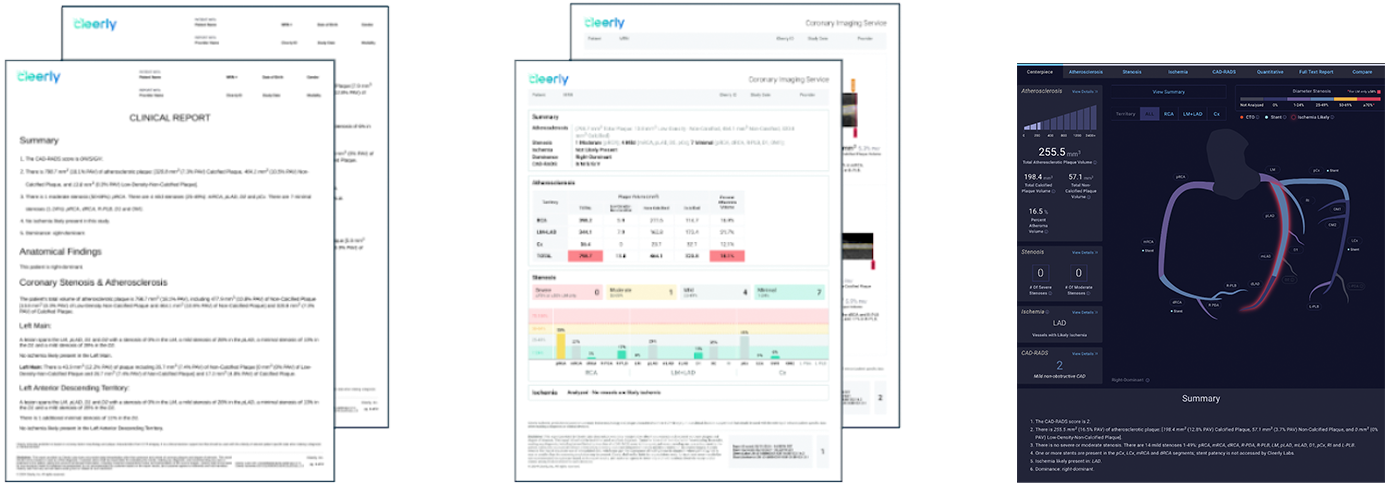
Cleerly Reports include an interactive, web-based summary and details of our AI-based plaque, stenosis and ischemia analysis to help providers translate clinical data for personalized CAD diagnosis and treatment.
Provider reports include an interactive, web-based summary of findings and details on the total amount and type of plaque, severity of stenoses, and likelihood of ischemia within individual vessels.
-
References
1 Data on File
2 Data on File
3 Data on File
4 Omori, Hiroyuki, et al. Determination of lipid-rich plaques by artificial intelligence-enabled quantitative computed tomography using near-infrared spectroscopy as reference. Atherosclerosis, vol. 386, 2023
5 Omori, Hiroyuki, et al. Determination of lipid-rich plaques by artificial intelligence-enabled quantitative computed tomography using near-infrared spectroscopy as reference. Atherosclerosis, vol. 386, 2023
6 Nurmohamed, N, Danad, I, Jukema, R. et al. Development and Validation of a Quantitative Coronary CT Angiography Model for Diagnosis of Vessel-Specific Coronary Ischemia. J Am Coll Cardiol Img. 2024 Aug, 17 (8) 894–906
7 Choi AD, et al. CT Evaluation by Artificial Intelligence for Atherosclerosis, Stenosis and Vascular Morphology (CLARIFY): A Multi-center, international study. J Cardiovasc Comput Tomogr. 2021 Nov-Dec;15(6):470-476. Doi: 10.1016/j.jcct.2021.05.004. Epub 2021 Jun 12.
8 Griffin, William F et al. AI Evaluation of Stenosis on Coronary CTA, Comparison With Quantitative Coronary Angiography and Fractional Flow Reserve: A CREDENCE Trial Substudy. JACC. Cardiovascular imaging vol. 16,2 (2023): 193-205. doi:10.1016/j.jcmg.2021.10.020
9 Chang, Hyuk-Jae et al. Coronary Atherosclerotic Precursors of Acute Coronary Syndromes. Journal of the American College of Cardiology vol. 71,22 (2018): 2511-2522. doi:10.1016/j.jacc.2018.02.079
10 Nurmohamed, Nick S et al. Atherosclerosis quantification and cardiovascular risk: the ISCHEMIA trial. European heart journal, 5 Aug. 2024, doi:10.1093/eurheartj/ehae471
11 Kim Y, Choi AD, Telluri A, et al. Atherosclerosis Imaging Quantitative Computed Tomography (AI-QCT) to guide referral to invasive coronary angiography in the randomized controlled CONSERVE trial. Clin Cardiol. 2023 May;46(5):477-483. doi:10.1002/clc.23995. Epub 2023 Feb 27
Efficient workflows
CCTA uploads for Cleerly analysis can be done a number of ways, including through direct upload, the Nuance Powershare network, intelerad Inteleshare, and Cleerly Proxy. Cleerly Proxy is a cloud-based solution with minimal onsite footprint that integrates into existing hospital, health system, and practice workflows.
Average Cleerly processing time is 1 hour, 20 minutes* with <2% rejection rates within two hours*, and can be received via email, DICOM PDF, DICOM SC or our web portal.
*During standard working hours Monday to Friday until 6PM EST
Request your Cleerly demo
Contact us for a one-on-one software demonstration with a Cleerly expert to see how bringing Cleerly’s AI‑driven CCTA analysis to your organization can empower you to provide personalized treatment decisions for your patients.